
Wearing gloves can make craft work less safe because they can give you a false sense of security, making you feel protected even if the gloves aren’t suitable for the chemicals or materials involved. Some gloves may tear or degrade quickly, especially if they aren’t resistant enough for certain substances or rough handling. This can lead to unintentional exposure or injury. If you want to understand how to choose and care for gloves properly, there’s more to discover.

Get business pricing on tools and workshop supplies
- Business-only prices and quantity discounts
- Tax-exempt purchasing
- Multiple users, one account, clear invoices
Key Takeaways
- Incorrect glove selection can lead to chemical exposure if gloves are not resistant to specific substances.
- Gloves may tear or degrade, providing false assurance of protection during prolonged or heavy use.
- Poorly fitting gloves can reduce dexterity, increasing the risk of accidents or injuries.
- Relying solely on gloves can cause neglect of other safety practices, leading to greater hazards.
- Using low-quality or incompatible gloves may fail under stress, compromising overall safety during craft work.
Have you ever assumed that wearing gloves always makes your craft work safer? It’s a common belief, but it’s not always the case. Gloves can provide valuable chemical protection, shielding your skin from harmful substances, but only if you choose the right type. Not all gloves are designed for every task, and using the wrong kind may offer a false sense of security. For instance, some gloves may resist certain chemicals but fail under prolonged exposure or heavy use. So, it’s vital to understand the specific chemical protection your gloves provide. If you’re handling solvents, acids, or other hazardous materials, make sure the gloves are rated for that particular chemical. Otherwise, you risk exposure, which can lead to serious health issues.
Choosing the right gloves is crucial for chemical safety and effective protection.
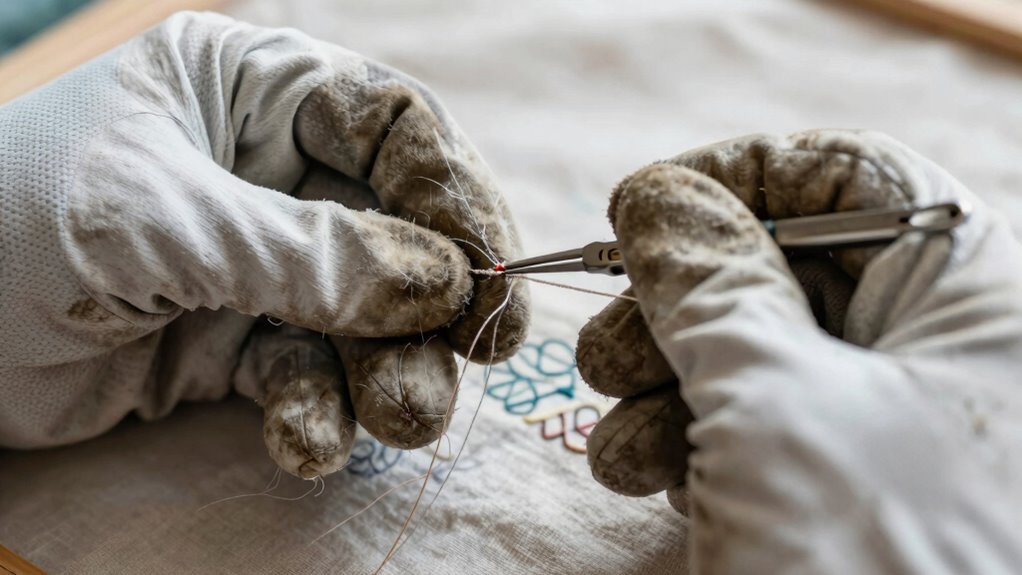
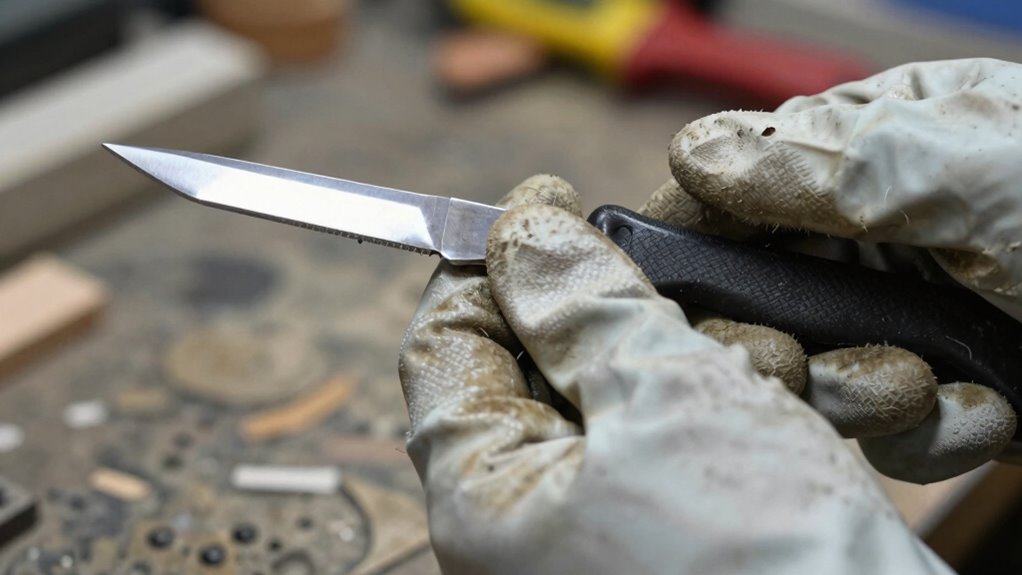
Another key factor is glove durability. No matter how well a glove initially protects you, if it quickly tears or wears out during your work, your safety is compromised. Thin or low-quality gloves might seem convenient, but they tend to puncture or degrade faster, especially when you’re working with sharp tools, rough surfaces, or abrasive materials. Over time, these gloves become less reliable, and you might not notice small tears or thinning spots until it’s too late. Durable gloves, made from sturdy materials, are essential when your craft involves rigorous movements or challenging materials. They guarantee continuous protection and minimize the chance of accidental exposure. glove durability is closely linked to the material quality and proper handling during use, which can significantly extend their protective lifespan. Choosing gloves with appropriate material can also enhance their resistance to wear and tear. Additionally, understanding the chemical resistance of different glove materials can help you select the most effective protection for your specific needs.
It’s easy to overlook the importance of proper glove selection, especially when you’re focused on your craft. But neglecting chemical protection and glove durability can lead to injuries or health hazards. You might think that a snug fit is enough, but if the gloves aren’t designed for the chemicals or tasks at hand, that fit won’t matter. Proper fit, combined with the right material, ensures better dexterity and reduces the risk of tearing. Remember, even the strongest gloves are only effective if they’re used correctly. Inspect your gloves regularly for signs of wear, and replace them promptly to maintain safety. Proper glove care is often overlooked but is crucial to ensure ongoing protection and longevity of your safety equipment.
Ultimately, wearing gloves isn’t just about covering your hands; it’s about choosing the right gloves that offer true chemical protection and possess the durability needed for your work. Don’t assume that all gloves are equal or that your initial choice will serve throughout your project. Be proactive in selecting gloves suited for your specific craft, and always prioritize safety over convenience. Proper glove selection and maintenance are essential for effective protection, helping you enjoy your work without risking unnecessary injuries or health issues.
As an affiliate, we earn on qualifying purchases.
Frequently Asked Questions
Can Glove Material Affect Grip and Dexterity?
Yes, glove material can affect your grip and dexterity. Materials with high flexibility improve comfort and allow better finger movement, enhancing precision in your craft work. Conversely, stiffer materials may reduce grip enhancement and make handling small tools more difficult. Selecting gloves with the right balance of flexibility and grip enhancement guarantees you maintain control and dexterity, making your craft work safer and more efficient.
Are There Specific Gloves for Different Craft Activities?
Think of glove selection like choosing the right tool for the job; specific gloves suit different craft activities. You should look for gloves with proper sizing to guarantee comfort and dexterity. Color coding helps quickly identify gloves designed for tasks like painting or handling chemicals. When you pick the right gloves tailored to your craft, you keep your hands protected while maintaining control, turning your work into a seamless dance rather than a clumsy stumble.
How Do Gloves Impact Tactile Feedback During Detailed Work?
Wearing gloves can reduce your tactile feedback, impacting your ability to feel tiny details during craft work. This sensory impairment makes it harder to gauge pressure, texture, or fine movements, leading to precision reduction. As a result, you might struggle with delicate tasks, increasing the risk of mistakes or accidents. To maintain control, choose gloves designed for dexterity and fit snugly, or occasionally work without gloves when precision is essential.
What Are the Signs of Glove Deterioration or Damage?
You’ll notice signs of glove deterioration or damage through tears, holes, or thinning areas, which reduce effectiveness. Discoloration or stiffness may also indicate material breakdown. Making sure proper glove storage away from heat and sunlight helps maintain material compatibility, preventing premature damage. Regularly inspect gloves before use, especially if they’ve been stored improperly or exposed to harsh conditions, to ensure they’re safe and functional for your craft work.
Do Gloves Increase the Risk of Static Electricity?
Gloves can sometimes dramatically increase your risk of static electricity, creating an electrostatic buildup that feels like a lightning storm on your fingertips. This happens when the material insulation of the gloves interacts with your environment, especially in dry conditions or when working with sensitive electronic components. Certain glove materials, like rubber or latex, trap static charges, making static discharge more likely and potentially dangerous, especially around delicate electronics.
durable protective gloves for crafts
As an affiliate, we earn on qualifying purchases.
As an affiliate, we earn on qualifying purchases.
Conclusion
Just like Icarus flying too close to the sun, you might think gloves are your safety wings, but they can sometimes cause more harm than good. When working with sharp tools or delicate materials, they can give a false sense of security or even hinder your grip. Remember, even in the world of craft, wisdom lies in knowing when to wear gloves and when to trust your skill—lest you fall prey to unseen dangers.
latex or nitrile gloves for chemical handling
As an affiliate, we earn on qualifying purchases.
As an affiliate, we earn on qualifying purchases.
glove fitting and safety tips for crafts
As an affiliate, we earn on qualifying purchases.
As an affiliate, we earn on qualifying purchases.
Fall yard work Picks
leaf blowers
As an affiliate, we earn on qualifying purchases.