Using a craft table that’s too high or too low causes poor posture, which quickly leads to fatigue and discomfort. When the table isn’t at elbow level when you’re seated, you strain your shoulders, arms, and back. This misalignment forces you to hold awkward positions, making your muscles work harder. To avoid this, make sure your workspace supports natural, relaxed posture. Keep exploring to discover how to set up your craft station for maximum comfort and efficiency.
Key Takeaways
- Setting the craft table too high causes shoulder and arm strain, leading to quicker fatigue.
- Incorrect table height forces awkward postures, increasing muscle tension and reducing comfort during long sessions.
- A height not aligned with elbow level disrupts natural arm positioning, causing fatigue in shoulders and neck.
- Using a non-adjustable table without customizing height can lead to repetitive strain injuries.
- Improper tool placement due to incorrect table height increases reaching, contributing to faster tiredness.
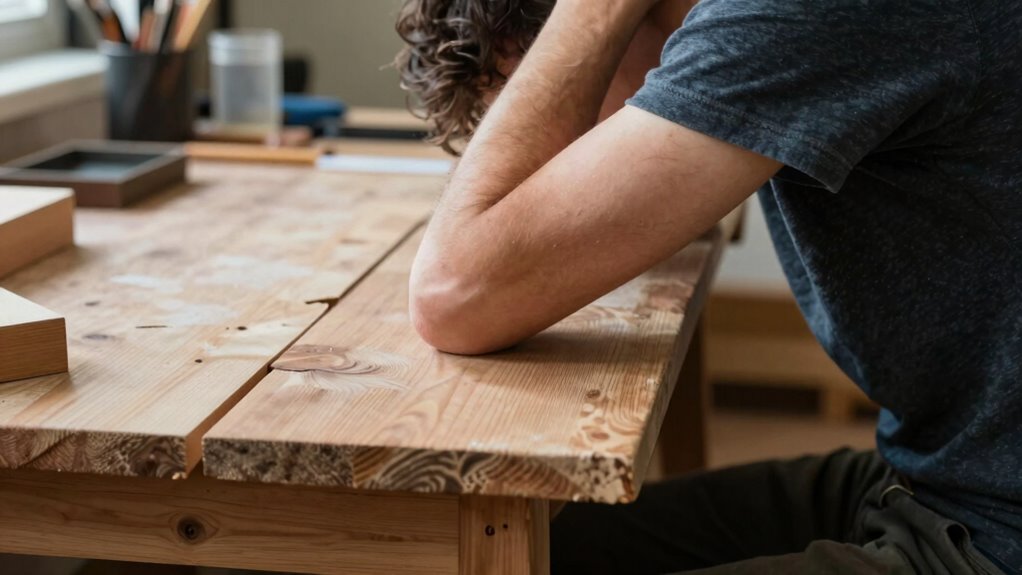
Have you ever set up a craft table only to find your workspace uncomfortable or inefficient? It’s frustrating when you spend time organizing your supplies only to realize that your setup is causing unnecessary strain. One common mistake that leads to quick fatigue is choosing the wrong table height. If your craft table is too high or too low, it forces you into awkward postures, which can leave you sore and tired long before you finish your project. To avoid this, you need to pay attention to ergonomic adjustments—making sure your workspace supports your body in a natural, relaxed position. Proper ergonomic adjustments help you maintain comfort during long crafting sessions and prevent repetitive strain injuries.
Ensure your craft table height supports natural posture to prevent fatigue and discomfort during long projects.
When your craft table isn’t at the right height, it affects more than just your posture. It also impacts tool placement, which plays a crucial role in your efficiency and comfort. If your tools are scattered or hard to reach because your workspace isn’t set up correctly, you’ll spend more time reaching and adjusting, adding to your fatigue. Ensuring your tools are within easy reach and organized logically allows you to work smoothly without unnecessary movements. For example, keep frequently used items like scissors, glue, and brushes close to your dominant hand and at a height that allows your elbows to stay close to your sides. This minimizes strain on your shoulders and arms, making your workflow more natural and less tiring. Additionally, understanding ergonomic principles can help you optimize your workspace for long-term comfort. Recognizing the importance of proper posture can further enhance your crafting experience and prevent discomfort. Incorporating ergonomic tools into your setup can also make a significant difference in reducing fatigue during extended sessions. Focusing on correct tool placement also helps reduce unnecessary reaching and ensures a more efficient workflow.
Adjusting your craft table’s height isn’t complicated, but it does require some attention. The ideal height usually aligns with your elbow level when seated comfortably, with your forearms parallel to the work surface. If you’re standing, the table should come up to about waist level. If you’re working for extended periods, consider adding an adjustable height table or a sturdy platform to fine-tune your setup. Remember, it’s not just about the table height—your chair or seating position matters too. Proper ergonomic adjustments include checking your back support, foot placement, and overall posture, all of which combine to reduce fatigue. It can also be helpful to take regular breaks to stretch and reset your posture, especially during long crafting sessions.
In the end, taking the time to set up your craft table correctly will pay off. When your workspace supports good ergonomic adjustments and strategic tool placement, you’ll notice less discomfort and more enjoyment in your projects. You’ll be able to craft longer and more comfortably, turning a simple hobby into a more satisfying and sustainable activity.

Veken 55 Inch Large Electric Standing Desk,Sit to Stand Up, Heights Adjustable, Work Home Office Computer Table for Study, Walking Pad, Writing, and Games, Wooden Desktop Desks, White
Electric Height Adjustment – Sit or Stand Any Time: Quiet motor (under 52 dB) with memory presets. Easily…
As an affiliate, we earn on qualifying purchases.
As an affiliate, we earn on qualifying purchases.
Frequently Asked Questions
How Can I Measure My Ideal Craft Table Height Accurately?
To measure your ideal craft table height accurately, follow ergonomic principles by sitting comfortably with your elbows at a 90-degree angle. Use measurement techniques like a tape measure or adjustable stand to find the height from your elbow to the floor. Adjust the table so it matches this measurement, ensuring your wrists stay straight while working. This setup minimizes fatigue and promotes comfort during extended crafting sessions.
Does Desk Height Affect Hand and Wrist Health?
Imagine your hands as delicate dancers—your desk height plays a vital role in their performance. Yes, desk height affects hand and wrist health; poor ergonomics can lead to wrist strain and discomfort. By following ergonomic principles, you can maintain a natural wrist position, reducing fatigue and injury risk. Proper desk height keeps your wrists aligned, preventing strain and ensuring you craft comfortably and efficiently all day long.
What Tools Help Adjust Craft Table Height Easily?
To easily adjust your craft table height, use ergonomic accessories like adjustable supports or risers. These tools allow you to customize the height quickly, ensuring comfort during long projects. Consider adjustable supports that fit under your table or ergonomic risers that can be added or removed effortlessly. Investing in these accessories helps maintain proper posture, reduces fatigue, and makes crafting more enjoyable and less strainful.
Can Wrong Height Cause Long-Term Posture Issues?
Yes, setting your craft table at the wrong height can lead to long-term posture issues. When your workspace doesn’t follow ergonomic principles, you might strain your neck, shoulders, or back over time. Proper height encourages posture correction and reduces fatigue, preventing chronic pain. Always guarantee your table height allows your elbows to stay at a 90-degree angle and your feet flat on the floor, supporting healthy, long-term posture.
How Often Should I Reassess My Craft Table Height?
You should reassess your craft table height every few months or whenever you notice discomfort. Material selection and ergonomic accessories can help optimize your workspace, but regular checks guarantee your setup remains comfortable. Adjust your table height so your elbows are at a 90-degree angle and your wrists stay straight. Using ergonomic accessories like footrests or adjustable chairs can also support better posture and prevent fatigue over time.

HOME WORKSPACE ERGONOMICS: The Complete Guide To Increasing Comfort, Health, And Productivity
As an affiliate, we earn on qualifying purchases.
As an affiliate, we earn on qualifying purchases.
Conclusion
If your craft table feels like an unyielding mountain or a sinking ship, it’s a sign to adjust. When your workspace aligns perfectly with your height, your body can glide smoothly through each project, like a boat sailing effortlessly on calm waters. Avoid the fatigue that comes with poor posture—think of your craft table as a trusted companion, supporting your creativity rather than weighing it down. Set it right, and let your inspiration flow freely.

WINAZ Small Rolling Desk with Drawers & Storage – 32 Inch Adjustable Height Standing Desk on Wheels for Teachers, Students, Portable Mobile Workstation for Home Office, Small Spaces, Sewing & Crafts
Height Adjustable Rolling Desk Perfect Back-to-School Gift — ideal for kids rooms, homework stations, student apartments & classrooms….
As an affiliate, we earn on qualifying purchases.
As an affiliate, we earn on qualifying purchases.

Marbrasse Desk Organizer, 360-Degree Rotating Pen Holder, Desk Organizers and Accessories with 5 Compartments Pencil Organizer, Art Supply Storage Box Caddy for Office, Home(Green)
【Smart 360 Degree Revolving Design】: This desktop organizer can be turned up to 360-degree rotation to the left…
As an affiliate, we earn on qualifying purchases.
As an affiliate, we earn on qualifying purchases.