
To avoid resin flash curing and overheating, keep the resin within the recommended temperature range of 75°F–85°F (24°C–29°C) using controlled heat sources like heat mats or lamps. Monitor the temperature regularly with a digital thermometer and make certain your workspace is free of drafts and direct sunlight. Stir gently for even heat distribution, and if the resin gets too warm, allow it to cool before proceeding. Staying mindful of temperature fluctuations helps you achieve perfect curing; discover how to master this process for professional results.

Get business pricing on tools and workshop supplies
- Business-only prices and quantity discounts
- Tax-exempt purchasing
- Multiple users, one account, clear invoices
Key Takeaways
- Maintain resin temperature within recommended ranges (75°F–85°F) using controlled heat sources or workspace environment.
- Regularly monitor resin temperature with accurate infrared or candy thermometers during work.
- Avoid drafts, direct sunlight, and heat sources that can cause uneven or excessive heating.
- Use heat mats or controlled lamps to gently and evenly warm resin, preventing hot spots.
- Stir resin gently and thoroughly to distribute temperature evenly and prevent localized overheating.
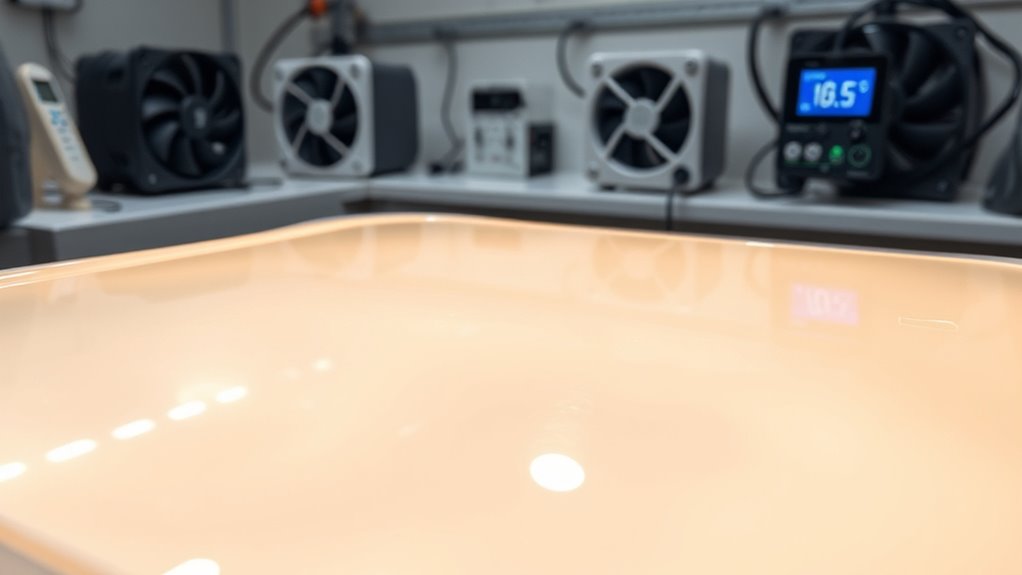
Resin flash curing and overheating can quickly ruin your project if you’re not careful. When working with resin, controlling the resin temperature is essential because it directly influences the curing speed. If the resin gets too warm, it accelerates the curing process uncontrollably, leading to flash curing—where the resin hardens too quickly and unevenly. This can cause surface imperfections, air bubbles, or even cracks, ruining the final look and integrity of your piece. To prevent this, you need to monitor the resin’s temperature closely from the start. Most resins have a recommended temperature range, often between 75°F and 85°F (24°C to 29°C). Staying within this range ensures your resin cures at a steady, manageable pace, giving you enough working time to manipulate, pour, or shape the material without rushing.
Understanding how curing speed relates to resin temperature helps you avoid common pitfalls. When the resin is too cold, it takes longer to cure, which might seem beneficial but can lead to issues like incomplete curing or tackiness. Conversely, if the resin becomes too warm, the curing speed increases dramatically, risking flash curing. To keep the temperature stable, work in a controlled environment—avoid drafts, direct sunlight, or high-heat sources. If you’re in a cooler space, consider using a heat mat or a controlled lamp designed for resin work to maintain a consistent temperature. Conversely, if the environment is too warm, you can cool down the workspace or use chilled resin components to slow down the curing process. Recognizing and managing the resin’s temperature effectively helps prevent flash curing and overheating.
Measuring the resin temperature is simple with a digital infrared thermometer or a standard candy thermometer. Regularly check the temperature during mixing and before pouring. If the resin begins to heat up excessively, stop working temporarily, and allow it to cool down before proceeding. This prevents rapid curing and minimizes the risk of overheating. Additionally, mixing thoroughly but gently helps distribute heat evenly and prevents localized hot spots that could trigger flash curing. Remember, patience is key; rushing the process by ignoring temperature considerations can lead to ruined projects and wasted materials.
resin temperature control heat mat
As an affiliate, we earn on qualifying purchases.
As an affiliate, we earn on qualifying purchases.
Frequently Asked Questions
What Are the Best Types of Resin to Use for Heat-Sensitive Projects?
For heat-sensitive projects, you should choose resins formulated for low curing temperatures. Look for formulations labeled as “low-temperature curing” or “temperature-sensitive.” These resins often have a modified resin formulation that reduces exothermic heat during curing, preventing overheating. Always check the resin’s recommended curing temperature to verify it matches your project’s heat constraints. This way, you avoid flash curing and ensure a smooth, safe curing process.
How Does Ambient Temperature Affect Resin Curing and Overheating Risks?
Imagine the ambient temperature as the gentle breeze guiding your resin’s dance. When it’s warm, the curing speed accelerates, risking flash curing and overheating. Cool surroundings slow this process, giving you better control. You feel the heat build up faster in warmer environments, making it tricky to prevent excess heat. Keep the temperature steady to make certain the curing process is smooth and avoid overheating, letting your resin set perfectly without surprises.
Can Resin Flash Curing Be Safely Reversed or Corrected After It Occurs?
Resin flash curing can’t be fully reversed, but you can perform resin flash correction by gently heating the affected area to soften the resin. Use curing reversal techniques like applying isopropyl alcohol or carefully sanding the surface once the resin cools. Always work slowly and cautiously to avoid damaging your project. If needed, you might also use a UV light to selectively cure or soften specific areas.
Are There Specific Brands Known for Lower Heat Generation During Curing?
Imagine the gentle glow of a soft sunset—some brands, like ArtResin and EcoPoxy, are known for lower heat during curing, reducing the risk of flash curing. Brand comparisons reveal that choosing resins with advanced heat reduction techniques can make all the difference. To keep temperatures down, consider mixing smaller batches, using a thinner layer, or curing in cooler environments. These steps help prevent overheating and guarantee a smooth, safe process.
What Safety Precautions Should Be Taken When Working With High-Heat Resins?
When working with high-heat resins, you should always wear protective gear like gloves and goggles to prevent skin and eye contact. Guarantee proper ventilation systems are in place to reduce inhalation of fumes and heat buildup. Keep a fire extinguisher nearby and work in a well-ventilated area. Always follow manufacturer instructions carefully, and avoid overmixing or applying excessive heat to prevent accidents and health risks.
digital infrared thermometer for resin
As an affiliate, we earn on qualifying purchases.
As an affiliate, we earn on qualifying purchases.
Conclusion
By following these tips, you can prevent resin flash curing and overheating, ensuring a smooth printing process. For example, imagine you’re working on a detailed model when sudden overheating causes warping. If you keep an eye on your temperature and adjust exposure times accordingly, you’ll save time and materials, achieving a perfect finish. Stay attentive, tweak your settings, and your resin projects will come out flawless every time. Happy printing!
resin curing temperature monitor
As an affiliate, we earn on qualifying purchases.
As an affiliate, we earn on qualifying purchases.
As an affiliate, we earn on qualifying purchases.
Columbus Day / Indigenous Peoples' Day Picks
long weekend sales
As an affiliate, we earn on qualifying purchases.